
Ibsen’s Life and Influences
Henrik Ibsen, born in 1828, experienced a challenging upbringing impacting his dramatic themes. His family’s financial struggles and societal observations fueled his realistic portrayals.
Early career setbacks led to periods of self-imposed exile, fostering artistic development. Exposure to diverse cultures and intellectual circles profoundly shaped his worldview.
Ibsen’s exploration of societal constraints, particularly regarding women, is evident in A Doll’s House. His work reflects a critical examination of 19th-century norms.
The Rise of Realism in Theatre
Realism emerged as a reaction against romanticism, prioritizing truthful depictions of everyday life. Henrik Ibsen became a pivotal figure, challenging theatrical conventions with authentic dialogue.
His plays, like A Doll’s House, mirrored contemporary societal issues, sparking debate and controversy. This movement emphasized psychological depth and relatable characters, rejecting melodrama.
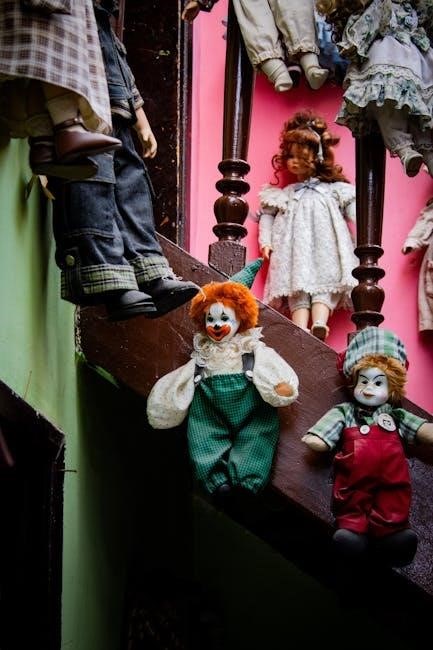
The focus shifted to exploring complex human relationships and the impact of social forces, influencing subsequent dramatic writing and performance styles profoundly.

Plot Summary and Key Characters
A Doll’s House unfolds within the comfortable, yet stifling, home of the Helmer family. The play centers around Nora Helmer, who initially appears as a frivolous and childlike wife, devoted to her husband, Torvald. However, beneath this facade lies a secret: Nora forged her father’s signature to obtain a loan, enabling a life-saving trip for Torvald’s health.
The narrative gains momentum with the arrival of Kristine Linde, an old acquaintance of Nora’s, seeking employment. Simultaneously, Krogstad, a lawyer with a questionable reputation, threatens to expose Nora’s forgery, aiming to blackmail Torvald and secure his position at the bank. This threat unravels the carefully constructed illusion of the Helmer’s perfect life.
Key Characters:

- Nora Helmer: The protagonist, a woman grappling with societal expectations and her own identity.
- Torvald Helmer: Nora’s husband, a newly appointed bank manager, embodying patriarchal values.
- Kristine Linde: A pragmatic and resourceful woman seeking independence and a meaningful life.
- Krogstad: A complex character driven by desperation and a desire for social rehabilitation.
As Krogstad’s pressure intensifies, Nora desperately attempts to persuade Torvald to intervene, but his pride and concern for his reputation obstruct his understanding. The climax arrives with the revelation of Nora’s secret, leading to a shattering confrontation and her ultimate decision to leave her husband and children, seeking self-discovery.
Detailed Plot Synopsis
The play opens on Christmas Eve in the Helmer’s tastefully furnished home. Nora busily prepares for Christmas, appearing as a carefree wife anticipating Torvald’s new position as bank manager. However, she secretly struggles with the weight of her past deception – the illegal loan she secured to fund Torvald’s recovery from a serious illness.
Kristine Linde arrives, seeking employment, and recounts her own hardships. Simultaneously, Krogstad visits, subtly threatening Nora with exposure. His motive stems from a past indiscretion and a desire to restore his reputation. Nora attempts to persuade Torvald to reinstate Krogstad, but he refuses, prioritizing his own standing.
Desperate, Nora seeks help from Dr. Rank, a family friend harboring a secret affection for her. He reveals his impending illness, adding another layer of emotional complexity. Krogstad delivers a letter to Torvald revealing Nora’s forgery. Torvald, upon discovering the truth, reacts with outrage and self-righteous indignation, prioritizing societal perception over Nora’s motives.
In a pivotal scene, Nora confronts Torvald, realizing the superficiality of their marriage. She understands she has been treated as a ‘doll’ within their home. Ultimately, Nora chooses to leave, rejecting the constraints of her marriage and embarking on a journey of self-discovery, leaving Torvald and their children behind.
Nora Helmer: A Character Analysis
Nora Helmer initially presents as a frivolous, childlike wife, seemingly content within her domestic sphere. However, beneath this façade lies a complex and resourceful woman burdened by a secret – a forged loan to save her husband’s life. This deception reveals her capacity for independent action and a willingness to break societal norms for love.
Throughout the play, Nora’s character undergoes a profound transformation. She evolves from a seemingly naive and obedient wife to a self-aware individual questioning the foundations of her marriage and societal expectations. Her interactions with Kristine Linde and Dr. Rank expose her growing dissatisfaction and yearning for intellectual and emotional fulfillment.
Nora’s final act of leaving her husband and children is a radical assertion of her individual identity. It’s a rejection of the ‘doll’s house’ existence where she was treated as a plaything rather than an equal partner. This decision, though controversial for its time, highlights Ibsen’s exploration of female emancipation and the search for authentic selfhood.
Ultimately, Nora embodies the struggle for female autonomy in a patriarchal society, challenging the conventional roles assigned to women and paving the way for a more equitable future.
Torvald Helmer: A Character Analysis
Torvald Helmer initially appears as a respectable, successful lawyer and devoted husband, embodying the conventional values of 19th-century bourgeois society. He prioritizes reputation and social standing, meticulously crafting an image of domestic bliss and moral uprightness. However, beneath this polished exterior lies a controlling and condescending nature.
Torvald’s interactions with Nora reveal his patronizing attitude and his tendency to treat her as a child, a “lark” or “squirrel” to be admired and controlled. He values her beauty and charm but fails to recognize her intelligence or emotional depth. His obsession with maintaining a flawless public image blinds him to Nora’s inner struggles and sacrifices.
The revelation of Nora’s secret throws Torvald’s world into disarray, exposing his hypocrisy and self-centeredness. His reaction is not one of understanding or compassion, but of outrage and fear for his reputation. He prioritizes societal judgment over his wife’s well-being, demonstrating a profound lack of empathy.
Ultimately, Torvald represents the restrictive societal norms that stifle individual growth and perpetuate gender inequality. His inability to evolve beyond conventional expectations contributes to the play’s tragic outcome.
Kristine Linde: A Character Analysis
Kristine Linde serves as a crucial foil to Nora Helmer, representing a contrasting experience of societal constraints and personal sacrifice. Unlike Nora, who has lived a sheltered life within the confines of her marriage, Kristine has faced hardship and responsibility, becoming a widow and raising her children alone.
Initially appearing reserved and pragmatic, Kristine seeks financial assistance from Torvald, revealing a past relationship with Krogstad and a desperate need for stability. Her practicality and willingness to confront difficult realities stand in stark contrast to Nora’s seemingly carefree existence.
However, Kristine is not simply a pragmatic survivor; she possesses a quiet strength and a deep understanding of the limitations imposed upon women in their society. She recognizes the emptiness beneath Nora’s facade of happiness and subtly challenges her to confront the truth about her own situation.
Kristine’s eventual decision to prioritize her own needs and independence, rather than relying on a man for support, mirrors Nora’s ultimate awakening. She embodies a potential path for female empowerment, demonstrating the possibility of self-reliance and genuine fulfillment.
Krogstad: A Character Analysis
Krogstad initially appears as a villainous figure, a morally compromised man attempting to blackmail Torvald Helmer to secure his position at the bank. His past transgression – a forgery committed in youthful desperation – haunts him, shaping his present circumstances and fueling his resentment towards a society that judges him harshly.
However, a closer examination reveals Krogstad as a complex character driven by a desire for redemption and social respectability. He isn’t inherently malicious; rather, he’s a product of the same societal pressures that constrain Nora and Kristine. His desperation stems from a need to provide for his children and rebuild his reputation.
Krogstad’s interaction with Nora exposes the hypocrisy of societal morality. While Torvald condemns his past actions, he readily overlooks Nora’s own deceit, highlighting a double standard based on gender. Krogstad’s willingness to withdraw the incriminating letter demonstrates a capacity for compassion and a recognition of Nora’s plight.
Ultimately, Krogstad represents the consequences of societal judgment and the possibility of rehabilitation. He challenges the audience to question their own prejudices and consider the complexities of human motivation, moving beyond simplistic notions of good and evil.
The Constraints of Marriage
A Doll’s House powerfully critiques the institution of marriage as it existed in 19th-century society, portraying it not as a union of equals, but as a restrictive power dynamic. Nora’s marriage to Torvald is built on a foundation of superficial affection and societal expectations, rather than genuine understanding or mutual respect.
Torvald views Nora as a charming “doll” – a possession to be admired and controlled – rather than a fully realized human being with her own thoughts, feelings, and ambitions. He infantilizes her, dictating her behavior and dismissing her intellectual capabilities. This dynamic stifles Nora’s individuality and prevents her from developing a sense of self.
The play exposes the economic dependence of women within marriage. Nora’s act of forgery, while illegal, was motivated by a desire to save Torvald’s life, yet she is condemned for it, while he remains oblivious to the sacrifices she’s made. This highlights the limited agency women possessed and their vulnerability within the confines of marriage.
Ibsen demonstrates how societal expectations and the constraints of marriage can lead to deception, self-denial, and ultimately, a profound sense of alienation. Nora’s eventual departure signifies a rejection of these constraints and a courageous pursuit of self-discovery.
Gender Roles and Societal Expectations
A Doll’s House is a scathing indictment of the rigid gender roles and suffocating societal expectations imposed upon women in the 19th century. Ibsen meticulously portrays a world where women were primarily defined by their roles as wives and mothers, denied opportunities for personal and intellectual growth.
Nora Helmer embodies the constraints placed upon women. She is expected to be a decorative object, pleasing to her husband and maintaining a perfect household. Her intelligence and capabilities are dismissed, and she is treated as a child, incapable of handling serious matters. This infantilization reinforces her dependence on Torvald and limits her autonomy.
Kristine Linde, in contrast, represents the harsh realities faced by women lacking financial security and marital status. She is forced to prioritize practicality and sacrifice personal fulfillment to survive. Her situation underscores the limited options available to women outside of marriage.
Ibsen challenges the prevailing notion that a woman’s primary purpose is to serve her husband and family. Through Nora’s awakening, he questions the validity of these expectations and advocates for women’s right to self-determination and a life lived on their own terms. The play sparked considerable controversy due to its radical portrayal of female agency.
The Importance of Individual Identity
A Doll’s House powerfully explores the crucial need for individuals to forge their own identities, independent of societal expectations and the roles imposed upon them. Ibsen demonstrates the devastating consequences of living a life based on pretense and the suppression of one’s true self.
Nora Helmer’s journey is fundamentally about her quest for self-discovery. Initially presented as a frivolous and childlike figure, she gradually realizes the extent to which her identity has been constructed by others – her father, then her husband. She has been treated as a ‘doll’ in a ‘doll’s house,’ denied the opportunity to develop her own thoughts, beliefs, and values.
The play highlights the damaging effects of living a lie. Nora’s secret loan and subsequent deception, while motivated by love, ultimately contribute to her sense of alienation and dissatisfaction. She recognizes that she doesn’t truly know herself, having spent years playing a role dictated by societal norms.
Ibsen champions the importance of authenticity and self-respect. Nora’s decision to leave Torvald, though shocking for the time, is a courageous act of self-assertion. It signifies her commitment to embarking on a journey of self-discovery and defining her own existence, free from the constraints of a patriarchal society.
The Illusion of Happiness
A Doll’s House masterfully dismantles the façade of Victorian domestic bliss, revealing the pervasive illusion of happiness that often masked underlying discontent and repression. Ibsen exposes the emptiness at the heart of a marriage built on unequal power dynamics and societal expectations.
The Helmer household initially appears to be a picture of comfortable prosperity and affection. However, beneath the surface lies a web of secrets, lies, and unfulfilled desires. Torvald’s controlling nature and Nora’s subservient role create an environment where genuine emotional connection is stifled.
Ibsen demonstrates that true happiness cannot be achieved through superficial appearances or the fulfillment of societal roles. Nora’s seemingly idyllic life is revealed to be a carefully constructed performance, designed to maintain the illusion of a perfect wife and mother. She sacrifices her own needs and desires to conform to Torvald’s expectations.

The play suggests that genuine happiness requires honesty, authenticity, and mutual respect. Nora’s awakening and her eventual rejection of the conventional marriage represent a rejection of the false promises of Victorian society. She chooses to pursue a life of self-discovery, even if it means sacrificing the comfort and security of her current existence, seeking a happiness rooted in truth.
Money and Social Status
Ibsen portrays how financial security dictates social standing in A Doll’s House. The Helmers’ status relies heavily on Torvald’s bank position and Nora’s careful maintenance of appearances;
Debt and secrecy surrounding money create tension, revealing societal pressures and the vulnerability of women lacking financial independence.

Dramatic Techniques and Style
Henrik Ibsen revolutionized theatre through his innovative dramatic techniques, particularly evident in A Doll’s House. He masterfully employed realism and foreshadowing, creating a sense of impending crisis that grips the audience. Unlike melodramatic conventions, Ibsen focused on portraying life “as it is,” with nuanced characters and believable dialogue.
His style eschews grand pronouncements, favoring subtext and unspoken tensions. Conversations appear commonplace, yet beneath the surface lie complex motivations and hidden truths. This technique compels the audience to actively interpret the characters’ actions and decipher their underlying emotions. The use of symbolic props, like the macaroons, further enriches the play’s layers of meaning.
Ibsen’s deliberate pacing builds suspense, gradually revealing Nora’s predicament and the suffocating constraints of her marriage. He avoids sensationalism, instead opting for psychological realism, exploring the internal conflicts of his characters. The play’s structure, unfolding primarily within the confines of the Helmer home, intensifies the sense of claustrophobia and societal entrapment. This intimate setting allows for a concentrated examination of the characters’ relationships and their struggles for self-discovery.
Furthermore, Ibsen’s use of dramatic irony – where the audience knows more than the characters – heightens the dramatic tension and invites critical reflection on the societal norms being challenged.
Realism and Naturalism in Ibsen’s Writing
Henrik Ibsen is considered a pivotal figure in the development of both realism and naturalism in theatre, though his relationship to each is nuanced. While often categorized together, these movements differ in emphasis. Realism, as practiced by Ibsen in A Doll’s House, sought to portray life truthfully, focusing on everyday experiences and relatable characters, avoiding sensationalism or romantic idealization.
He meticulously crafted dialogue that mirrored natural speech patterns, and his settings were convincingly domestic. However, Ibsen moved beyond simple replication of reality. He delved into the psychological and social forces shaping his characters’ lives, anticipating elements of naturalism.
Naturalism, a more deterministic offshoot of realism, emphasized the influence of heredity and environment on human behavior. While Ibsen acknowledged these factors, he retained a degree of individual agency for his characters, particularly Nora, allowing her to actively challenge her predetermined fate.
A Doll’s House exemplifies Ibsen’s realistic approach through its depiction of a middle-class family and their seemingly ordinary concerns. Yet, the play’s exploration of societal hypocrisy and the stifling of female identity reveals a deeper, critical engagement with the social forces at play, hinting at naturalistic concerns without fully embracing its deterministic worldview.
Use of Dialogue and Subtext
Henrik Ibsen’s mastery of dialogue in A Doll’s House is central to its dramatic power. His characters don’t simply state their feelings; they engage in conversations laden with unspoken meanings and hidden agendas. This skillful use of subtext creates tension and reveals the complex dynamics within the Helmer household.

The seemingly innocuous exchanges between Nora and Torvald often mask underlying power imbalances and emotional distance. Nora’s playful pet names for Torvald, for instance, initially appear affectionate but gradually reveal a patronizing dynamic. Similarly, Torvald’s pronouncements on morality and responsibility conceal his own vulnerabilities and self-deception.
Ibsen employs a realistic conversational style, mirroring the rhythms and interruptions of everyday speech. However, beneath the surface of these naturalistic dialogues lie layers of concealed truths and repressed desires. Characters frequently avoid direct confrontation, communicating through hints, evasions, and carefully constructed facades.

This reliance on subtext compels the audience to actively interpret the characters’ motivations and unravel the complexities of their relationships. The silences and what isn’t said are often as significant as the spoken words, contributing to the play’s enduring ambiguity and psychological depth.
Initial Controversy and Public Reaction
A Doll’s House, upon its premiere in 1879, ignited a firestorm of controversy across Europe, particularly regarding its audacious ending. The depiction of Nora’s decision to leave her husband and children was considered shockingly unconventional and morally reprehensible by many contemporary audiences.
The play challenged deeply ingrained societal norms surrounding marriage, motherhood, and women’s roles. Critics vehemently condemned Ibsen for portraying a woman who prioritized her own self-discovery over her familial obligations. Some accused him of undermining the sanctity of marriage and promoting radical feminist ideals.
Productions often faced censorship and protests. In some instances, theatre managers were compelled to stage alternative endings that offered a more palatable resolution for audiences unwilling to accept Nora’s departure. These modified versions typically depicted Nora’s reconciliation with Torvald, preserving the traditional family structure.
Despite the initial outrage, the play also garnered significant praise from progressive thinkers and feminist advocates who recognized its groundbreaking exploration of female agency and societal constraints. The debate surrounding A Doll’s House propelled Ibsen to international fame and cemented his reputation as a revolutionary playwright.
Critical Interpretations Over Time
Initial critical responses to A Doll’s House, as previously noted, were sharply divided, oscillating between condemnation and praise. However, over time, interpretations have evolved, moving beyond simplistic moral judgments to encompass more nuanced understandings of Ibsen’s intent.

Early 20th-century criticism often focused on the play’s feminist themes, viewing Nora’s departure as a triumphant assertion of female independence. Later, psychoanalytic approaches, influenced by Freud, explored the psychological complexities of the characters and their repressed desires.
Mid-century Marxist interpretations emphasized the play’s critique of bourgeois marriage and the economic constraints that limit individual freedom. More recently, poststructuralist readings have questioned the notion of fixed identities and highlighted the play’s ambiguity.

Contemporary scholarship often examines A Doll’s House through the lens of gender studies, exploring the performativity of gender roles and the construction of societal expectations. The play continues to resonate with audiences and scholars alike, prompting ongoing debates about its meaning and relevance in the 21st century. Digital access to the play via PDF formats has broadened its reach and facilitated diverse analytical perspectives.
Modern Adaptations and Productions
A Doll’s House has experienced a remarkable resurgence in modern adaptations and productions, demonstrating its enduring relevance. Lucas Hnath’s A Doll’s House, Part 2, a direct sequel, has garnered significant acclaim, sparking conversations about Nora’s life after her departure and challenging conventional notions of closure.
Numerous regional and international theatre companies continue to stage Ibsen’s original play, often reimagining it in contemporary settings to highlight its universal themes. These productions frequently explore issues of gender inequality, economic disparity, and the search for individual identity.
Film adaptations, while less frequent, have also contributed to the play’s continued visibility. The accessibility of the play through PDF versions has further fueled creative reinterpretations, inspiring new theatrical works and academic analyses.
Recent productions have experimented with diverse casting choices and innovative staging techniques, aiming to reach wider audiences and provoke fresh perspectives. The play’s adaptability allows directors and designers to explore its complexities in innovative ways, ensuring its continued presence on stages worldwide. These modern interpretations solidify A Doll’s House as a timeless masterpiece.
Reliable Sources for PDF Downloads
Locating a trustworthy PDF version of Henrik Ibsen’s A Doll’s House requires careful consideration. Project Gutenberg ([https://www.gutenberg.org/](https://www.gutenberg.org/)) offers a free, legally accessible ebook version, often available for download in PDF format, ensuring a reliable and classic text.
Many university and college websites provide PDFs of the play for academic purposes. These are generally accurate transcriptions, though access may be restricted to enrolled students or require library credentials. Internet Archive ([https://archive.org/](https://archive.org/)) also hosts digitized copies, including various editions of the play.
Be cautious when downloading from unofficial sources, as these may contain errors or incomplete texts. Websites offering “free PDF downloads” should be vetted for legitimacy to avoid potential malware or copyright infringement.
Reputable online bookstores, like Amazon and Barnes & Noble, often offer digital versions for purchase, guaranteeing a high-quality PDF. Always verify the publisher and edition before downloading to ensure textual accuracy and avoid unauthorized copies. Prioritize sources with established reputations for academic integrity.
Analyzing PDF Versions: Textual Accuracy
When utilizing a PDF of Henrik Ibsen’s A Doll’s House for study, verifying textual accuracy is paramount. Compare the PDF’s formatting – including act and scene divisions, dialogue indentation, and character names – against a known, reliable edition, such as one from a scholarly publisher or Project Gutenberg.
Pay close attention to potential OCR (Optical Character Recognition) errors if the PDF originates from a scanned copy. These can manifest as misread characters, incorrect punctuation, or garbled words, significantly impacting comprehension. Cross-reference key passages with multiple sources to identify discrepancies.
Examine the PDF’s introductory material. Does it include a preface, notes, or critical commentary? These elements can provide valuable context but also introduce potential editorial biases. Assess the translator’s credentials if the PDF is not in the original Norwegian.
Look for consistent formatting throughout the document. Inconsistencies may indicate a poorly prepared PDF. Finally, consider the source’s reputation. PDFs from academic institutions or established digital libraries are generally more reliable than those from unknown websites.
Using PDFs for Study and Research
A PDF version of Henrik Ibsen’s A Doll’s House offers portability and accessibility for academic purposes. Utilize PDF readers’ search functions to quickly locate specific lines, character names, or thematic keywords, streamlining research and analysis.
Annotation tools within PDF software allow for direct engagement with the text. Highlight key passages, add notes, and bookmark important sections for easy reference during essay writing or presentations. Consider creating a system of color-coding for different themes or character arcs.
PDFs facilitate close reading by enabling side-by-side comparison with critical essays or scholarly articles. This allows for immediate contextualization and deeper understanding of Ibsen’s dramatic techniques and societal commentary.
When citing the PDF, meticulously record publication details, including the source website, date accessed, and any available edition information. Remember to verify the PDF’s textual accuracy (see previous section) before relying on it for scholarly work. PDFs are excellent supplemental resources, but should ideally be corroborated with printed editions.